Record scope
Define the parcel, event, document, or source-family context required for a usable output.
Start with the smallest practical way to use local property intelligence, then scope exports, recurring datasets, API access, or licensing around the records, workflow, and systems your team actually operates.
The same local source and parcel context that supports an in-product workflow should remain visible when a team evaluates exports, recurring data, or a scoped integration.
Actual local source operations view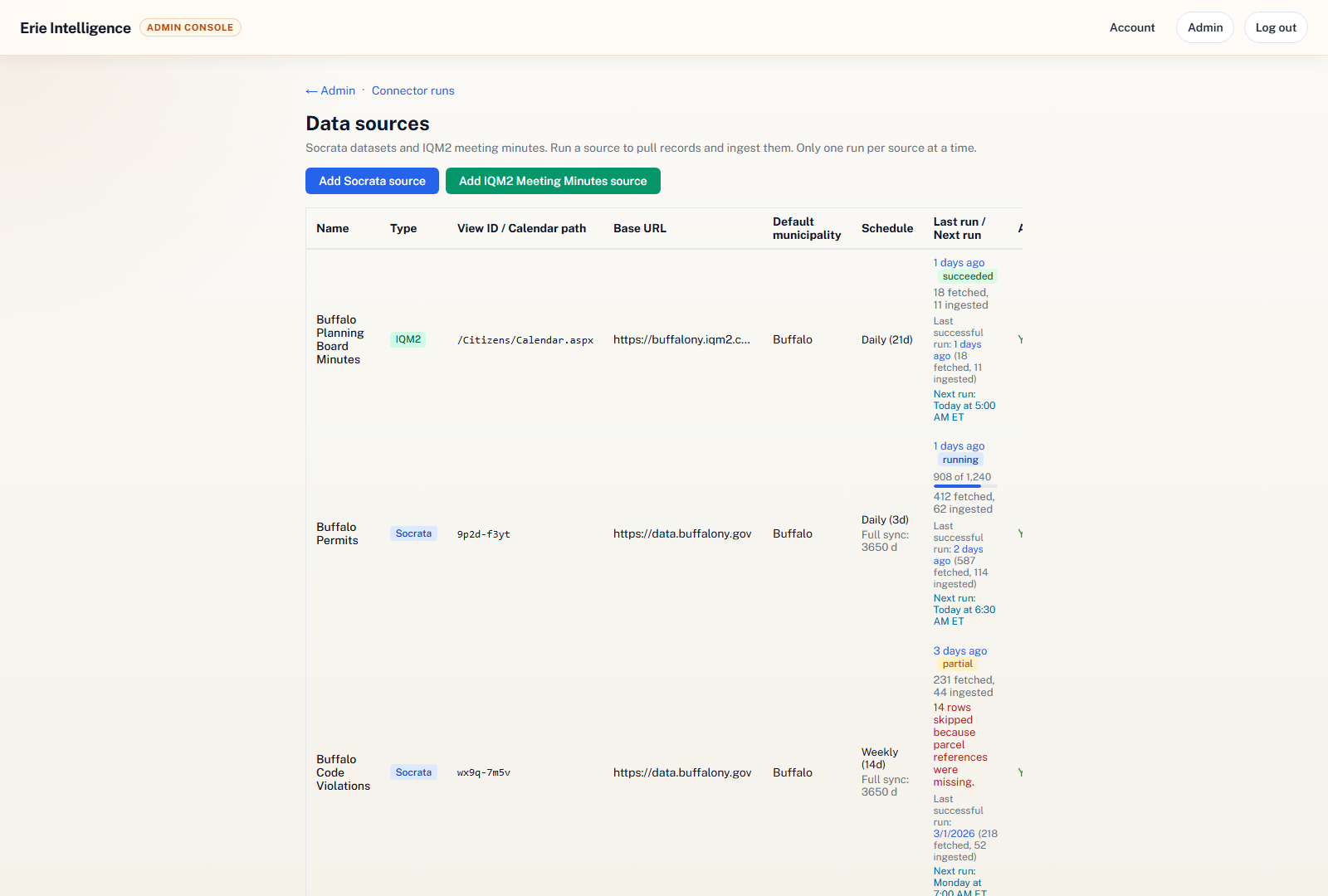
The module is useful when it turns a broad local question into a reviewable next action without losing the supporting context.
Start with the smallest delivery surface that makes the workflow useful. More technical or recurring paths are scoped with the records and operating need in view.
Use the parcel record, research surfaces, and workflows to validate how local intelligence fits the team before introducing a technical handoff.
Useful outputA focused local workflow your team can inspect and refine directly.
The point of a delivery path is to preserve the local property, record, and provenance context that made the intelligence useful in the first place.
Define the parcel, event, document, or source-family context required for a usable output.
Match provenance, access, and review expectations to the intended delivery or integration.
Choose a handoff that supports the team’s actual cadence instead of adding another disconnected feed.
Availability depends on the requested record families, local source coverage, historical depth, refresh behavior, delivery cadence, and commercial or technical requirements. Start by defining the decision the delivery must support.
Move into the part of the platform that helps research, verify, monitor, or deliver the work without starting over.